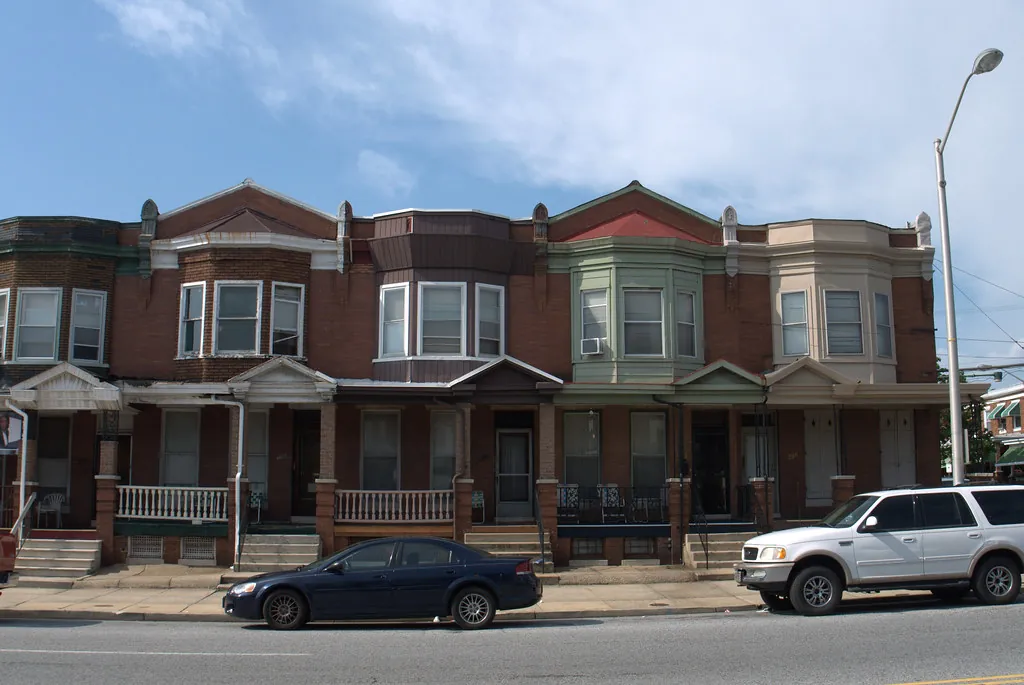
A Baltimore rowhouse roof claim rarely looks like a suburban shingle claim. Many of the city’s brick rowhouses were built between the 1880s and the 1920s, and most carry low-slope roofs – built-up tar and gravel, modified bitumen, rubber membranes or coated metal – sitting behind parapet walls and running straight across shared party walls. When wind lifts a membrane in Canton or a fallen limb punctures a roof in Hampden, the damage, the repair method and the insurer’s estimate can diverge quickly.
Why rowhouse roofs are different
Low slope, not flat
Rowhouse roofs are often called flat, but most are pitched slightly toward the rear to drain into a gutter or scupper. That small slope matters. Patching a membrane in the wrong spot or with mismatched material can leave ponding water that causes the next leak. Estimates that price a simple patch on a roof with multiple old layers may not reflect what a roofer can actually warrant.
Layers and tear-off
It is common to find two or three roofing layers stacked over the original deck. When repairs require removal down to the boards, the tear-off, disposal and deck replacement can exceed the cost of the new membrane. Whether building codes or the manufacturer’s requirements force a full tear-off is a frequent point of disagreement, and ordinance or law coverage may come into play.
Parapets, flashing and coping
The membrane turns up the parapet walls and under metal coping or flashing. Wind damage at the edges often means replacing flashing along the full run, not just at the visible tear. Brick parapets may need repointing where water has been getting behind the flashing, which raises the question of what is storm damage and what is age.
The party wall problem
Rowhouse roofs frequently continue across the party wall to the neighbour’s house, sometimes as one continuous membrane. A storm that damages one roof may damage the next, and a proper repair often needs a tie-in at the property line. That creates practical questions:
- Where exactly does your roof end and your neighbour’s begin?
- Can your portion be replaced without disturbing theirs, and what does a watertight tie-in cost?
- If the neighbour’s roof is failing, could water from their side be blamed for your interior damage?
Good photos from both sides of the line, with the neighbour’s permission, can head off arguments about cause later.
Plaster interiors and water damage
Many older rowhouses still have plaster on lath. When a roof leak soaks a ceiling, an insurer may price drywall as the replacement. Whether drywall or plaster is the right like-kind-and-quality repair depends on the policy, the extent of damage and whether a partial drywall patch can blend with surrounding plaster walls. Crown moulding, medallions and original trim add further questions. These details belong in the estimate from the start, not as a surprise during repairs.
Matching and the rest of the roof
Matching disputes come up even on low-slope roofs. A new membrane section may tie poorly into an aged one, and coatings may not bond reliably to older surfaces. The question isn’t whether the repair looks perfect, but whether the repaired roof is restored to a sound, watertight condition comparable to before the loss. Policy wording on matching varies, so check yours.
What to document after a rowhouse roof loss
- Date-stamped photos of the roof from the hatch or a ladder, including edges, seams and any debris.
- Interior photos of every stained or fallen ceiling, plus moisture readings if a mitigation company took them.
- The number of existing roof layers, if a roofer can core a small test cut.
- Measurements of the roof area and parapet runs; the roof square and pitch calculator helps convert dimensions into roofing squares.
- Receipts for emergency tarping or temporary patches.
- Any notes on the neighbouring roofs and where the property line sits.
An illustrative example
Consider a hypothetical two-story rowhouse in Patterson Park with a 700-square-foot roof after a thunderstorm. In this illustrative example, the insurer’s estimate pays to patch 80 square feet of membrane and repaint one bedroom ceiling. The owner’s roofer says the roof has three layers, the flashing has lifted along the rear parapet, and a lasting repair requires tear-off to the deck. The difference between those two scopes could easily run into thousands of dollars – not because anyone is being unreasonable, but because the two estimates describe different repairs. Appraisal is designed for exactly that kind of gap, provided the insurer accepts the storm caused the damage.
When to bring in help
If your rowhouse claim has stalled over scope, a review of both estimates can show which items are missing and whether appraisal is worth pursuing. Maryland Insurance Appraiser works on low-slope roof claims across the city; see our Baltimore service page or learn more about roof damage appraisal. If the insurer has denied the roof claim as wear and tear rather than disputing the amount, talk with a Maryland attorney about the coverage question first.