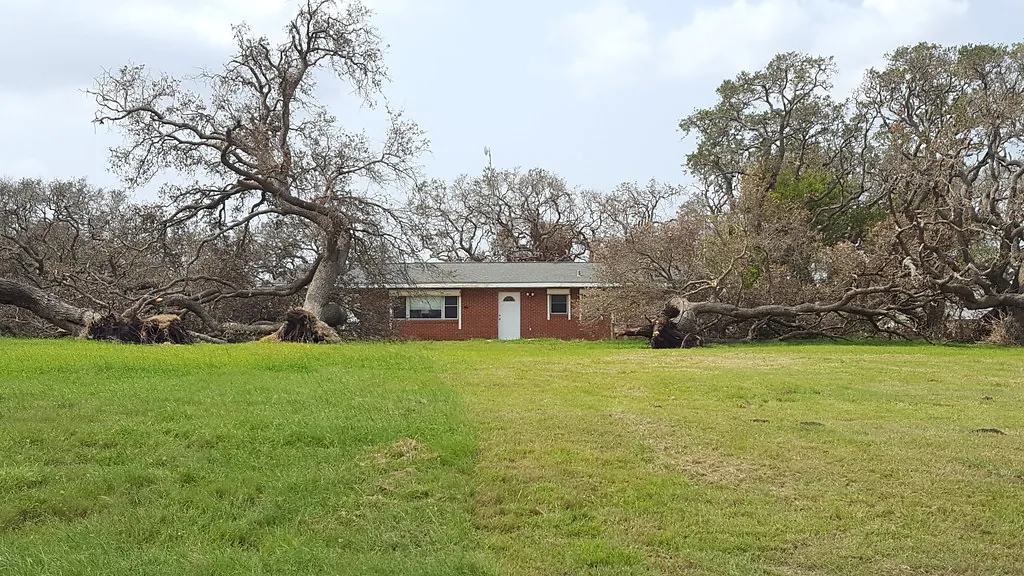
Maryland’s big trees and the storms that drop them
Mature oaks and tulip poplars line streets from Roland Park to Bowie and fill wooded lots throughout Howard, Montgomery, Anne Arundel and Harford counties. Tulip poplars grow tall and straight; oaks spread wide and carry heavy limbs. When saturated soil meets strong wind – a derecho, a tropical remnant, a nor’easter – they come down. The June 29, 2012 derecho left trees on roofs across the state, and many thunderstorms since have done the same on a smaller scale.
A tree on a house is rarely a simple claim. It involves emergency removal, sometimes with a crane, followed by structural repairs that can reach from the roof deck down to the foundation.
Removal limits versus repair costs
Most homeowners policies treat these as two different things:
- Tree and debris removal. Policies often include a limited allowance for removing a fallen tree, sometimes with per-tree and per-occurrence caps that are modest compared with real removal costs.
- Damage to the structure. Repairs to the roof, framing, siding, windows and interiors fall under the dwelling or other-structures coverage, subject to the policy limit rather than the removal cap.
Problems arise when the cost of getting the tree off the structure – crane time, rigging, a crew working carefully to avoid further damage – is lumped into the capped removal allowance. Much of that work is part of repairing the building, because the repair can’t start until the tree is lifted away. How your policy treats that distinction should be checked against its wording; the amount for each piece is something the panel can value.
What the carrier estimate often leaves out
Tree impacts transmit force through the structure. Damage that isn’t visible from the street is common:
- Cracked or broken rafters and ceiling joists beyond the obvious impact point.
- Shifted bearing walls and cracked plaster several rooms away.
- Damaged sheathing that must be replaced before new roofing goes on.
- Gutters, fascia and soffit along the full run, not just the dented section.
- Water damage from rain that entered before tarping.
- Engineering review where the framing has moved.
- Fences, decks, sheds and detached garages under other-structures coverage.
When the tree belonged to a neighbor
A frequent question is whose insurance pays when a neighbor’s tree falls on your house. In many cases your own policy responds to damage to your home regardless of where the tree stood, and any question of the neighbor’s responsibility is handled separately. If the tree was obviously dead or diseased and you think the neighbor was negligent, that is a liability question for an attorney, not an appraisal issue.
Building a tree claim file
Photos taken before the tree is removed are the most valuable evidence in these claims. After that, we look for:
- tree service invoices that break out crane and rigging time;
- attic and interior inspection notes and photos;
- a measured roof and framing scope;
- receipts for tarping and emergency board-up.
Maryland Insurance Appraiser values tree impact claims statewide, from older neighborhoods in Bowie to wooded lots in Carroll and Frederick counties. If the tree came down in a broader wind event, our windstorm and tornado appraisal page covers related roof and siding issues.
One practical point: if the tree service and the roofer are different companies, ask each to describe exactly what it did and on which day. Overlapping or vague invoices make it easy for an estimate to drop work that was genuinely done, and clear invoices make it easy for a panel to credit it.
Questions about tree impact claim appraisal
Does my policy’s tree removal limit cap the whole claim?
Usually not. Removal allowances typically apply to removing the tree and debris, while repairs to the house fall under dwelling coverage. How crane and rigging costs are treated depends on your policy wording.
A neighbor’s oak fell on my roof. Whose insurer pays?
In many cases your own homeowners policy covers damage to your home no matter whose tree it was. Questions about a neighbor’s negligence are legal issues to raise with a Maryland attorney.
Why does the adjuster’s estimate stop at the impact area?
Desk estimates often scope only visible damage. Tree impacts can crack framing and plaster well away from the impact point, which needs to be documented through an attic and interior inspection.