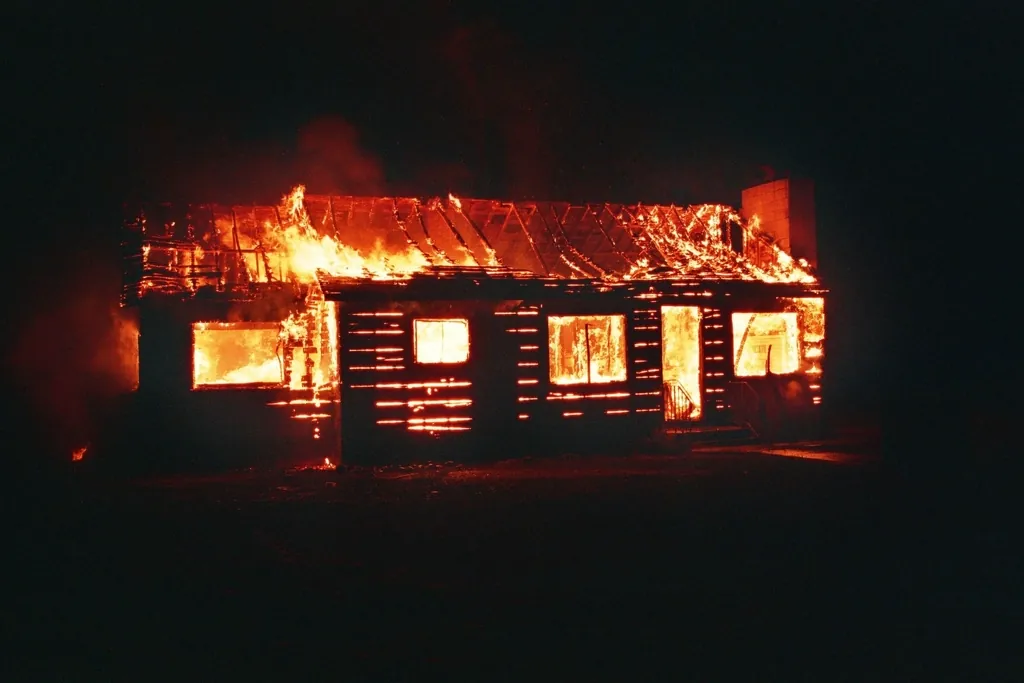
Fire in attached housing
A fire in a Baltimore rowhouse rarely stays in one home. Shared party walls, continuous cocklofts and connected roofs let heat, smoke and water from firefighting move into the houses on either side. The same is true in townhouse rows in Columbia, Bowie and Frederick County and in garden-style condo buildings. That creates claims for owners who never had flames in their own unit but now have smoke in the insulation, water through the ceiling and a party wall that needs structural work.
Each owner’s policy responds to its own damage, and each carrier may scope it differently. Where one neighbor’s estimate includes full cleaning of the attic and the other’s doesn’t, the difference is usually about evidence, not physics.
Smoke cleaning protocols are where estimates diverge
Smoke damage is the area with the widest gaps between carrier and contractor estimates. Soot migrates into wall cavities, HVAC ducts and closed cabinets, and the smell can return when humidity rises. A defensible scope follows a sequence:
- Assessment of smoke type and spread, room by room, including closed spaces.
- HEPA vacuuming and dry cleaning of surfaces before any wet cleaning.
- Wet cleaning of walls, ceilings, trim and cabinets.
- Duct cleaning and filter replacement for the heating and cooling system.
- Odor control, which may include sealing surfaces before paint.
- Paint and finish work after cleaning and sealing, not instead of them.
Carrier estimates sometimes jump straight to “clean and paint” on a handful of walls. If the smoke traveled further, the estimate should say so, and the photos and testing should show it.
Contents, ALE and code upgrades
Contents
Personal property claims after a fire involve hundreds or thousands of items. Disputes usually center on depreciation rates, whether smoke-exposed items can be cleaned or must be replaced, and items left off the inventory. We work from photos, receipts and room-by-room reconstruction to support the list.
Additional living expense
Fire rebuilds take time, especially when permits and inspections are involved. The ALE figure should track a realistic schedule for the repair, not an optimistic one.
Code and ordinance work
Rebuilding a 100-year-old rowhouse or a 1950s Cape Cod can require electrical, egress, smoke-alarm and structural upgrades. Whether those costs are covered depends on the policy’s ordinance or law provision and its limit, but their amount is something the panel can value.
How we approach fire files
- Early site visit, ideally before demolition removes the evidence.
- Separate estimates for structure, cleaning, contents and ALE.
- Replacement cost and actual cash value figures, so you can see what is being held back – our holdback worksheet helps here.
- Coordination with adjoining owners’ appraisers where a party wall is shared.
Maryland Insurance Appraiser handles fire and smoke files across the state, with a lot of attached-housing work in Baltimore. If the insurer has raised questions about the cause of the fire or about your policy’s conditions, talk to a Maryland attorney – appraisal values the loss but does not resolve those issues.
If you are still in temporary housing, keep receipts for rent, extra mileage and meals above your usual costs; those records support the living-expense figure.
Questions about fire & smoke damage appraisal
My neighbor’s rowhouse burned and mine has smoke damage. Do I have a claim?
Smoke and water damage from a neighboring fire is commonly covered under your own homeowners policy. Your insurer handles your claim, and if it accepts the loss but disputes the amount, appraisal may be available.
Can appraisal decide how much smoke cleaning is needed?
Yes, when coverage isn’t in dispute. The scope and cost of cleaning, sealing and repainting are valuation questions, and documentation of how far smoke traveled is what usually settles them.
Are building code upgrades after a Maryland fire included in an award?
The panel can value the cost of code-required work. Whether and how much of that cost the insurer pays depends on your policy’s ordinance or law coverage and its limit.