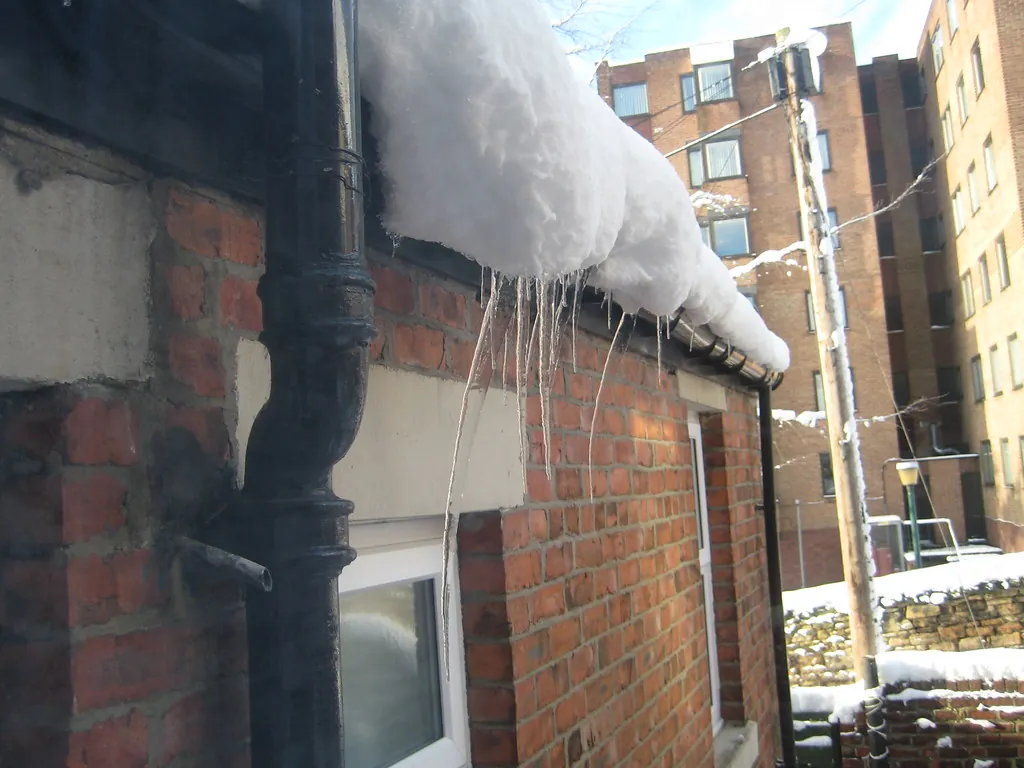
Winter hits the western end of the state harder than anywhere else in Maryland. Seasonal snowfall in Garrett County and the higher parts of Allegany County can far exceed what Baltimore or Annapolis sees, and long stretches below freezing set the stage for ice dams, sagging roofs and burst pipes. A Western Maryland ice dam claim often involves damage that builds quietly for days before anyone notices a stain on the ceiling – which is exactly why documentation and timing matter.
How ice dams form
An ice dam forms when heat escaping from the living space melts snow on the upper roof. The meltwater runs down to the colder eaves, where it refreezes into a ridge of ice. More meltwater then pools behind that ridge and works its way under shingles, through the roof deck and into walls and ceilings. Homes with limited attic insulation or ventilation, complex rooflines, or low-slope sections – common on older hillside frame houses in Cumberland and on lake cabins around Deep Creek Lake – are especially prone.
The visible signs include icicles hanging from gutters, ice building on the roof edge, water stains on exterior walls, and wet insulation in the attic. Damage can show up weeks later as peeling paint, warped trim or mould.
How insurers tend to view ice dam damage
Coverage depends on your policy wording, but some patterns are common:
- Many homeowners forms cover sudden interior water damage caused by an ice dam, such as soaked drywall, insulation and flooring.
- The ice dam itself, and routine removal of snow and ice, may not be covered as damage.
- Damage the insurer attributes to long-term seepage, poor maintenance or wear and tear may be excluded.
- Gutters torn off by ice weight, or a roof that deflects under heavy snow, may fall under a separate weight of ice, snow or sleet provision.
When the insurer accepts that ice dam water caused interior damage but undervalues the repair, appraisal can address the amount. When the insurer says the damage was gradual and excluded, that is generally a coverage question for an attorney.
Snow load and roof collapse
Ice dams aren’t the only winter risk. Heavy, wet snow on top of older ice can put serious weight on a roof. The February 2010 back-to-back blizzards caused roof collapses across the region, and Superstorm Sandy brought blizzard conditions to Garrett County in October 2012 while the coast flooded. Outbuildings, carports, porch roofs and low-slope additions tend to fail first. Our snow load roof estimator gives a rough sense of how much weight a given depth of snow may add – it is not an engineering assessment, but it can help you decide when to call a professional.
Frozen and burst pipes
Pipes in exterior walls, crawlspaces and seasonal cabins are vulnerable when temperatures plunge. Many policies cover sudden water damage from a burst pipe but limit or exclude freezing losses when a home was vacant or unheated unless the owner maintained heat or drained the system. Owners of second homes at Deep Creek should check their policy’s vacancy and freezing conditions carefully before winter.
What to document
- Photos of icicles and ice ridges on the roof edge, taken from the ground with a timestamp.
- Interior photos of every stain, bulge or drip, with notes on when you first saw it.
- Moisture readings or drying logs from a mitigation company.
- Attic photos showing wet insulation, frost or water trails along rafters.
- Receipts for snow removal, steaming, tarps or heaters used to limit damage.
- Local snowfall and temperature data for the days leading up to the loss.
Common estimate gaps on winter claims
Hidden water in walls
Meltwater often runs down inside exterior walls. An estimate that only replaces the stained ceiling may miss insulation, drywall and trim further down the wall. Moisture mapping helps define the true scope.
Roof edge repairs
Where shingles at the eaves have lifted or the underlayment is saturated, the repair may require replacing the starter course, drip edge and an ice and water shield membrane. Whether current code calls for that membrane along the eaves can affect ordinance or law coverage.
Access and seasonal pricing
Steep driveways, deep snow and limited contractor availability in the mountains can raise labour costs. Pricing should reflect actual local conditions, not a generic regional average.
Next steps
If your ice dam or snow claim is stuck on the numbers, Maryland Insurance Appraiser can review the estimate and explain whether appraisal fits. Learn more about our snow, ice dam and freeze appraisal work, or see our Cumberland service page for Allegany and Garrett County claims. For coverage denials, speak with a Maryland attorney.